What to Do If Fish Don't Bite. Turning Dead Days Into Fishing Success

10 min read
We’ve all been there—staring at a motionless rod tip, watching an undisturbed float, or feeling absolutely nothing at the end of the line. The dreaded fishless day. The skunk. The blank. Whatever you call it, when fish don’t bite, fishing quickly transforms from relaxing pastime to frustrating puzzle.
Accept Reality, Then Get Methodical
First things first—take a deep breath. Even professional anglers have tough days. The difference between amateurs and experts isn’t that experts never get skunked; it’s that they have a systematic process for turning things around.
When the fish aren’t biting, avoid the temptation to randomly try everything in your tackle box in quick succession. That’s fishing in panic mode, and it rarely works. Instead, work through a methodical troubleshooting process.
Let me walk you through mine.
Check Your Fundamentals
Before making major changes, verify you haven’t overlooked something basic:
Is your bait actually working correctly? This sounds obvious, but I can’t tell you how many times I’ve discovered my plastic worm was bunched up, my spinner wasn’t spinning, or my live bait had died. Take a moment to retrieve your line and check.
Are you using fresh bait? Old, dried-out bait loses its scent and appearance. Fish can tell the difference even if you can’t.
Is your presentation silent and natural? In pressured waters, the smallest unnatural movements or sounds can put fish off. Watch how your bait moves in the water column.
A quick story: Last year, I couldn’t buy a bite on a small stream until I realized my shadow was casting directly across my fishing zone. I repositioned, and suddenly the trout were interested again. Sometimes the fundamentals are that simple.
The Water Column Adjustment
If your fundamentals check out, the next question is simple but crucial: are you fishing at the right depth?
Fish, especially in changing conditions, rarely stay at one level throughout the day. They move up and down the water column following comfort (temperature, oxygen levels) and food sources.
Try this systematic approach:
- If fishing the bottom isn’t working, move up a few feet
- Continue working your way up the water column
- If nothing works, reverse the process and try deeper
- Pay special attention to thermoclines in deeper water
During a grueling tournament on a reservoir, I started at my usual summer depth of 15-18 feet without success. Systematic exploration revealed the fish had moved to a surprising 25-30 feet deep following a cold front. That adjustment saved my tournament.
Location, Location, Location
Sometimes the issue isn’t your gear or technique—you’re simply fishing where the fish aren’t. Even small bodies of water can contain numerous microenvironments, and fish might be concentrated in just one of them.
Ask yourself:
- Have I tried different structures? (points, drop-offs, weed edges)
- Have I explored different bottom compositions? (rock, sand, mud)
- Have I checked both shallow and deep water?
- Have I investigated transitional areas where these features meet?
On tough days, mobility often trumps persistence. The old saying “never leave fish to find fish” has a corollary: “don’t waste hours where fish aren’t.”
One cool trick I’ve learned: rather than making major moves, try “milk runs” where you hit 5-7 different spots for 20-30 minutes each, then return to any that showed promise. This strategy helped me crack the code on a particularly stubborn smallmouth bass bite last fall.
The Speed Factor
When fish aren’t biting, speed adjustment can make all the difference. As a general rule:
- Cold fronts, high pressure, or clear water = slower presentation
- Warm fronts, low pressure, or stained water = faster presentation
But these are just starting points. Whatever speed you’re currently fishing, try something dramatically different.
My buddy Mark taught me a great technique: the half-and-double rule. If fish aren’t responding, try moving your bait either half as fast or twice as fast as your current retrieve. This forces you to make meaningful changes rather than subtle adjustments that fish might not even notice.
Downsize… or Go Nuclear
Conventional wisdom says to downsize when the bite gets tough—smaller baits, lighter line, more finesse. This works brilliantly about 70% of the time in my experience. Fish that won’t commit to a full meal might still snap at a small, easy target.
But the other 30% of the time? Go bigger and bolder.
When everyone else is downsizing during tough conditions, showing fish something shockingly large can trigger reaction strikes or appeal to the biggest, most aggressive fish remaining active.
I experienced this phenomenon while fishing a heavily pressured lake during a fishing tournament. Everyone was throwing tiny finesse worms with limited success. Out of frustration, I tied on a 10-inch ribbontail worm—significantly larger than what anyone would consider appropriate for those conditions. The result? Three quality largemouth in an hour, including the second-biggest fish weighed in that day.
The theory is that while most fish become inactive during tough conditions, the dominant fish sometimes become more territorial. Your oversized bait becomes less about feeding and more about removing a perceived threat.
The Sound and Fury Option
When subtle approaches fail, introducing noise and vibration can sometimes trigger reaction strikes from otherwise inactive fish. Options include:
- Rattling crankbaits
- Chatterbaits
- Baits with Colorado blades
- Topwater with clackers
- Even slapping the water with your rod tip
This approach can be particularly effective in murky water, windy conditions, or when fish are holding deep. The added sensory input helps fish locate your bait when visibility is limited.
I discovered this technique by accident during a stormy day when my boat kept knocking against a dock. Each time it happened, nearby bass would strike my lure. I started deliberately creating disturbance and turned a potentially fishless day into a memorable one.
Color Changes Matter (Sometimes)
The importance of color changes depends greatly on water clarity:
In clear water: Subtle, natural colors usually outperform bright ones, but switching between different natural shades (green pumpkin to watermelon, for instance) can make a surprising difference.
In stained water: Contrast becomes more important than specific color. Black/blue, chartreuse/white, or other high-contrast combinations often work best.
In heavily stained or muddy water: Go with something dark (black, purple, blue) or something very bright (chartreuse, white, orange) that creates maximum vibration.
One approach that’s served me well: carry the same style of bait in both natural and “loud” color patterns. If one isn’t working after 30-45 minutes of focused fishing, switch to the opposite end of the spectrum.
The Timing Game
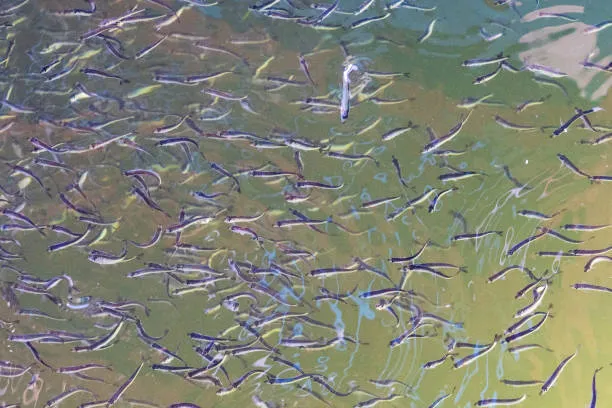
Fish feeding windows can be frustratingly narrow. Sometimes the difference between zero fish and a limit is simply a matter of being there during the right 45-minute window.
If possible, commit to fishing through different periods of the day:
- Dawn and dusk (classic feeding times)
- Major and minor solunar periods
- Tide changes (for coastal fishing)
- After weather changes
My most productive fishing days often started as complete failures. During a coastal redfish trip, we caught absolutely nothing for five hours. Then, as the tide started moving again, we caught and released 22 fish in 90 minutes. We simply had to wait out the lockjaw period.
Watch Wildlife Clues
Nature provides abundant clues about fishing conditions if you pay attention:
- Birds diving indicates baitfish near the surface
- Jumping baitfish often means predators below
- Turtles basking shows where warm water areas are
- Insect hatches suggest potential feeding opportunities
One evening on a difficult bass bite, I noticed frogs becoming active along a particular shoreline. Switching to a frog imitation resulted in immediate success. The bass weren’t interested in the crawfish imitations everyone was throwing, but they were keyed in on the amphibians that were suddenly abundant.
The Social Approach
When you’re struggling, information gathering becomes invaluable:
- Chat with other anglers (respectfully)
- Check local fishing reports and forums
- Call bait shops for recent patterns
- Look at recent tournament results
Just remember to filter advice carefully. “They were hitting green pumpkin craws yesterday” doesn’t mean they still are today, but it gives you a starting point.
I’ve found that the most valuable information often comes not from asking “what are they biting?” but rather “what presentation style is working?” Knowing that fish are responding to slow-dragged bottom baits tells you much more than knowing they like a specific color or brand.
Advanced Adjustments for Truly Tough Days
When nothing else works, these advanced adjustments sometimes save the day:
The Dead Stick Technique: Sometimes completely stopping your bait’s movement triggers strikes from wary fish. Cast out, let your bait settle, and leave it motionless for uncomfortably long periods (30 seconds to several minutes).
The Scent Factor: Adding attractants or switching to natural baits can make a critical difference during tough bites. Even dedicated artificial lure anglers should consider tipping their baits with a small piece of nightcrawler or minnow on the toughest days.
The Unconventional Retrieve: Try deliberately erratic retrieves with long pauses, twitching, or even dragging baits backward. Anything that presents a profile different from what pressured fish have been seeing.
The High-Percentage Spot Saturation: Instead of covering water, thoroughly saturate high-percentage areas. Make repeated casts to prime spots from different angles and with different presentations.
During a particularly difficult winter day on a clear lake, I caught my only fish by dead-sticking a small jig under a dock for nearly five minutes without moving it. The motionless presentation triggered a strike when nothing else would.
Mental Game: Avoid the Downward Spiral
Perhaps the most important adjustment when fish aren’t biting has nothing to do with tackle or technique—it’s your mindset.
Frustration leads to impatience, which leads to sloppier presentations and missed opportunities. Keep these psychological approaches in mind:
- Focus on the process rather than results
- Set small goals beyond just catching fish
- Take breaks to reset your mental state
- Remember that solving the puzzle is part of fishing’s appeal
My tournament partner has a great rule: after two hours without a bite, we take a mandatory 15-minute break. We eat something, drink water, and deliberately talk about anything except fishing strategies. This mental reset prevents the frustration spiral and has saved countless tough days.
When All Else Fails: Find Joy in the Journey
There will be days when, despite your best efforts, the fish simply won’t cooperate. That’s fishing. The anglers I most admire aren’t those who never get skunked—they’re those who can find value in even the fishless days:
- Appreciate the wildlife, scenery and solitude
- Use the time to practice techniques you normally wouldn’t
- Scout new areas for future trips
- Reflect on what you’re learning from the challenge
My grandfather, who taught me to fish, used to say, “The worst day fishing still teaches you something.” On fishless days, I still hear his voice and try to identify what lesson the water is offering.
Moving Forward: The Post-Skunk Analysis
Before putting away your gear after a tough day, take five minutes for this valuable exercise:
- Write down the conditions (weather, water clarity, temperature)
- Note what didn’t work
- Record any patterns you observed, even negative ones
- List one theory about why the fish weren’t biting
- Plan a specific approach for similar conditions next time
This simple practice transforms frustrating failures into valuable data points for future success.
Last summer, after a brutal day with no catches, my notes revealed a pattern: during bright, calm days following cold fronts on my home reservoir, shallow tactics consistently failed. This observation led me to develop a specific deep-water approach for those conditions that has since saved numerous trips.
The Final Cast
Remember this: a day without catching isn’t a day wasted if you approach it with the right mindset. The challenges make the successes sweeter, and the process of solving fishing puzzles develops skills that will serve you for decades on the water.
So the next time the fish aren’t biting, don’t despair. Work through these adjustments methodically, learn from the experience, and know that your next great fishing day might be just one small change away. After all, that’s what keeps us coming back—the knowledge that every cast carries the possibility of turning a tough day into a story worth telling.